If you’re pregnant in Australia, one of the biggest decisions you’ll make isn’t where you birth, it’s who walks with you.
This is called your Model of Care (MoC).
And while we love a good Pinterest birth board… what truly shapes your experience and outcomes is the structure of care around you.
Let’s unpack the main maternity Models of Care in Australia, grounded in evidence, not ideology, and explore what the research consistently shows.
1. Public Hospital Care
How it works:
You attend a public hospital. Care is typically shared among midwives and doctors. You may see different clinicians at different visits. At birth, whoever is rostered on supports you.
Pros
Free or low cost
Access to specialist services and neonatal care
Strong safety infrastructure
Considerations
Limited continuity
Short appointments
Busy systems
Less personalised care
According to the Australian College of Midwives (ACM), continuity improves outcomes, yet many public models still operate under fragmented care structures.
You absolutely can have a positive birth in the public system. But you may need to advocate more actively for yourself.
2. Private Obstetrician Care (Private Hospital)
How it works:
You choose a private obstetrician and birth in a private hospital. You’ll usually see the same OB throughout pregnancy.
Pros
Continuity with your doctor
Longer appointments
Private room postnatally
Scheduled birth options
Considerations
Higher intervention rates
Cost
Care may be more medically managed
The Royal Australian and New Zealand College of Obstetricians and Gynaecologists (RANZCOG) outlines excellent clinical guidelines for safety, yet Australia’s private sector consistently shows higher rates of induction, instrumental birth and caesarean.
For some women, especially those with complex medical histories, private OB care feels reassuring. For others, it can feel more procedural than physiological.
It depends what you value most.
3. Public Hospital Birth Centres
How it works:
Midwifery-led units within or alongside public hospitals. Designed for low-risk pregnancies.
Pros
Midwifery-led
Lower intervention rates
Access to hospital if needed
More homelike environment
Considerations
Strict eligibility criteria
Limited availability
Not all offer true continuity
The UK’s landmark Birthplace in England study (often called the Place of Birth Study) showed that midwifery-led units and home birth for low-risk women have comparable safety outcomes with fewer interventions.
Australia’s data aligns similarly for low-risk pregnancies. Birth centres are a beautiful middle path, when you can access one.
4. Private Free-Standing Birth Centres (International Evidence)
How it works:
Independent midwifery-led centres, not physically attached to hospitals, with clear transfer pathways.
In Australia, this model is emerging. Internationally, especially in the US and parts of Europe, outcomes are strong for well-screened low-risk women.
Evidence from accredited US birth centres shows:
Lower caesarean rates
High maternal satisfaction
Safe transfer systems
Research reviewed by organisations such as Homebirth Australia and international birth centre outcome registries consistently demonstrate safety in appropriate populations.
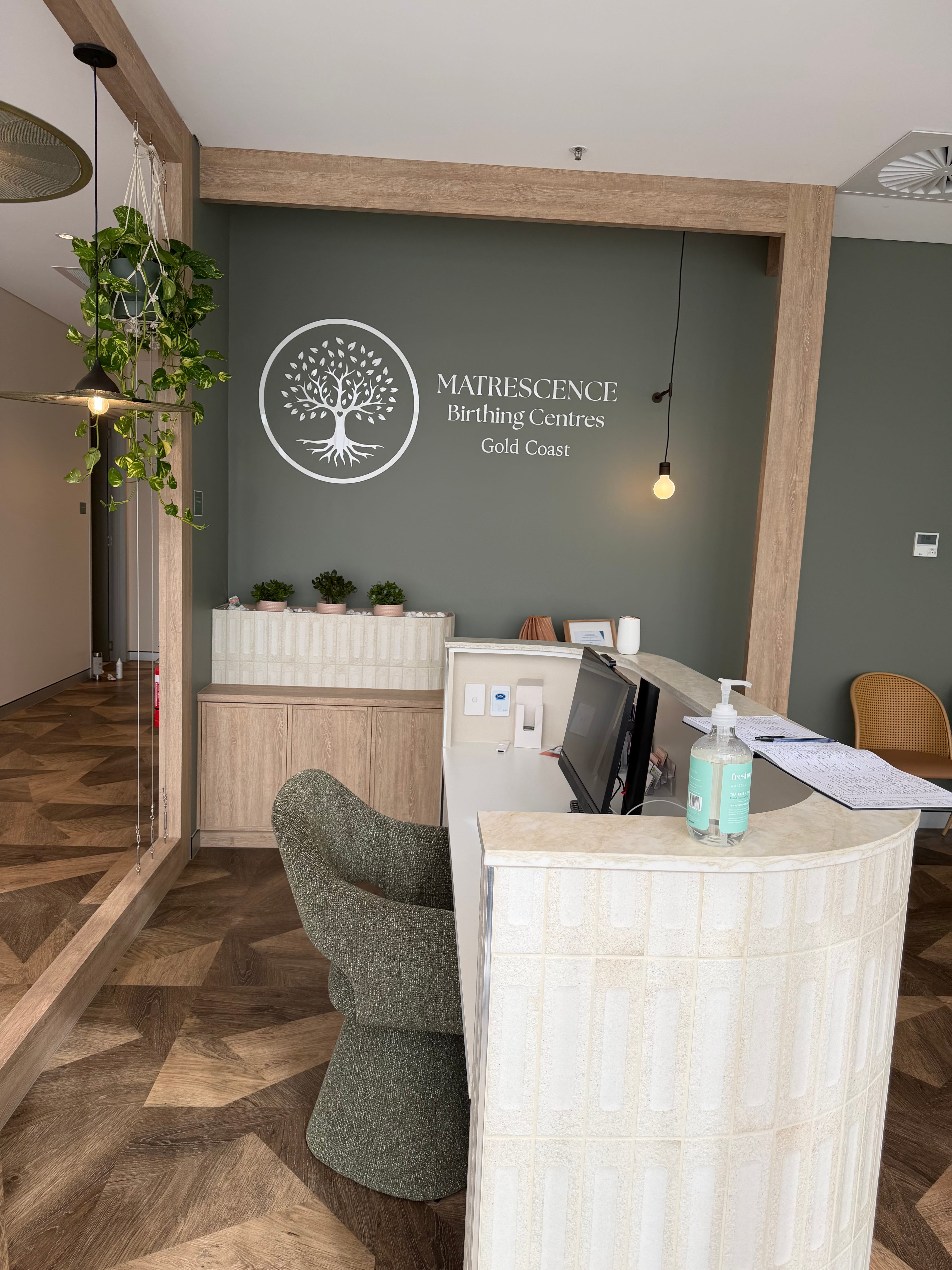
This is where the Matrescence Birthing Centre (MBC) - Gold Coast, Australia model sits. A thoughtfully designed space between home and hospital.
Luxurious. Calm. Midwife-led.
With structured safety protocols and collaborative transfer systems.
Not anti-hospital.
Not hyper-medical.
Just balanced.
5. Homebirth Through a Public Hospital Program
Some public hospitals now offer home birth programs.
Pros
Midwifery-led
Funded
Clear transfer pathway
Considerations
Strict criteria
Limited spots
May not guarantee known midwife continuity
Outcomes for low-risk women are excellent when supported within structured programs.
6. Private Homebirth with a Known Continuity of Care Midwife
This is where the evidence gets exciting.
Continuity of Care (CoC), where you have the same known midwife throughout pregnancy, birth and postpartum, is considered the gold standard by the Australian College of Midwives.
Large systematic reviews show that women receiving midwifery continuity:
Are less likely to have preterm birth
Are less likely to experience intervention
Report higher satisfaction
Have improved neonatal outcomes
For low-risk women, planned home birth with a regulated, insured, skilled midwife shows comparable safety to hospital birth, with lower intervention rates.
The key here is not just location. It’s relationship. Skill. Experience. Clinical judgement.
Birth can turn on a dime, even for seasoned practitioners.
Continuity means someone who knows your baseline and can detect subtle shifts early. And often, small, timely adjustments at home prevent the very hospital transfers many women fear.
7. Freebirth
Freebirth is when a woman intentionally births without a registered health professional present.
This is a deeply personal choice for some families.
Often, women choosing freebirth:
Desire autonomy
Have previous trauma
Feel unsupported in systems
Want undisturbed birth
These desires deserve compassion. And also, education.
Birth is physiological. It is powerful. And sometimes, it shifts rapidly.
Postpartum haemorrhage. Shoulder dystocia. Neonatal respiratory transition. Subtle foetal heart changes. Retained placenta.
Many emergencies begin quietly.
Trained clinicians don’t prevent every complication, but they are trained to recognise early signs and intervene calmly.
Freebirthing women often must:
Understand complex risk factors
Interpret physiology accurately
Manage neonatal assessment
Carry emergency medications or know how to access care
Stay cognitively alert throughout labour
That’s a lot.
It can make it harder to truly surrender into birth, because you’re holding both the primal and the clinical mind.
This isn’t written to shame. It’s written to inform.
If autonomy is your highest value, explore models that honour it with skilled backup.
There are beautiful middle paths.
What the Evidence Actually Says
Across major reviews, including insights emerging from the NSW Birth Trauma Inquiry, the consistent theme is:
Women want to be heard. Known. Respected. Informed. Supported.
Trauma is less about where you birth and more about:
Lack of consent
Lack of continuity
Dismissal of concerns
Fragmented communication
The research is clear:
Continuity of Care with a known midwife reduces intervention and improves satisfaction.
Location matters less than relationship.
So…what’s the Best Model?
There isn’t one “best” for everyone.
There is:
Your health profile
Your values
Your previous experiences
Your nervous system
Your support network
But if we’re speaking purely evidence-based?
Midwifery-led Continuity of Care is the gold standard for low-risk women.
And that can exist in:
Home
Birth centre
Collaborative hospital models
Integrated private systems
The Future: Integrated, Not Oppositional
We don’t need birth wars. We need integration.
A system where:
Midwives and obstetricians collaborate
Transfer is smooth, not shameful
Autonomy is respected
Safety is structured
Physiology is honoured
That’s the vision behind emerging free-standing centres like MBC.
Not anti-hospital. Not anti-homebirth. Not anti-obstetricians.
Just deeply pro-woman.
Final Thoughts
You deserve to:
Understand your options
See the evidence
Ask hard questions
Choose from a regulated, informed place
Birth is not just an event. It’s a nervous system imprint.
Choose the model that helps you feel:
Safe. Known. Supported. Respected.
And if you want someone to walk you through your options in real life, that’s exactly what I do.
Warmly,
Rachel
The Integrated Midwife