There is a moment during birth when everything seems to slow down.
A baby’s head begins to crown. The perineum stretches. The woman may instinctively pause, breathe, move or change the way she is pushing. The midwife watches, assesses and prepares to respond.
And then comes a question that has divided maternity professionals for decades.
Should we put our hands on the perineum, or should we leave it alone?
I’ve been a midwife for nearly two decades, and I’ve watched this debate unfold in birth suites, classrooms, research papers and clinical guidelines.
My answer?
Sometimes hands-on. Sometimes hands-off.
And always, individualised care.
Because birth is not a standardised event, and women are not interchangeable.
A Little Story About Nigel
Years ago, when I worked at Mater Mothers’ Hospital in Brisbane, I had the pleasure of working alongside midwife and researcher Dr Nigel Lee.
Nigel has always been deeply passionate about protecting women’s perineums and was a strong advocate for a hands-off approach to birth. I witnessed that commitment firsthand during our time working together.
What I appreciated was the depth of his conviction that we should be thoughtful about how and when we intervene during birth.
While I’ve always favoured an individualised approach to perineal care, I share that fundamental commitment to protecting women from unnecessary intervention and preventable injury.
Nigel went on to contribute to important Australian research examining perineal management and the implementation of the Perineal Care Bundle. And that research raises questions that every midwife, obstetrician and woman preparing for birth deserves to consider.

First, What Is the Perineal Care Bundle?
A perineal care bundle is a collection of clinical practices introduced together with the aim of reducing severe perineal trauma, particularly third- and fourth-degree tears.
These injuries, collectively known as obstetric anal sphincter injuries (OASI), involve damage to the muscles responsible for bowel control and can have significant physical and psychological consequences.
Preventing these injuries matters.
But how we prevent them matters too.
The Australian Perineal Care Bundle includes practices relating to communication, maternal positioning, manual perineal protection, episiotomy when clinically indicated, and examination following birth.
The intention is to reduce serious injuries through consistent care. But consistency and individualisation are not necessarily the same thing. And this is where the conversation becomes interesting.
Norway: A 63% Reduction in Severe Perineal Trauma
A 2025 study published in the American Journal of Obstetrics & Gynecology examined 324,930 first-time mothers having spontaneous vaginal births in Norway between 2002 and 2022.
The findings were impressive. The rate of obstetric anal sphincter injury fell from 5.4% to 2.1%. After statistical adjustment, the odds of OASI were 63% lower in the later period.
Norway had introduced a national programme in 2005 that emphasised hands-on perineal protection, controlling the speed of the baby’s head emerging, communication during crowning, selective episiotomy and comprehensive staff training.
The researchers attributed much of the improvement to the programme.
But there is an important distinction.
The study demonstrated that OASI rates declined following the introduction of a national programme. It did not prove that placing hands on the perineum was the reason.
This was an observational study, not a randomised trial. There was no direct comparison between women receiving hands-on and hands-poised care. And numerous other aspects of maternity care changed over those 21 years.
The findings deserve attention. But they should not be interpreted as proof that every woman requires manual perineal protection.
Meanwhile, Back in Australia…
Nigel Lee and colleagues examined what happened following implementation of the Australian Perineal Care Bundle. Their study, published in Women and Birth in 2024, analysed 26,428 term, spontaneous, unassisted vaginal births attended by midwives.
And the findings were quite different. After implementation, researchers found:
No statistically significant reduction in severe perineal trauma.
Increased odds of episiotomy among first-time mothers.
Increased odds of second-degree tears among women who had previously given birth.
The researchers questioned the widespread implementation of complex interventions without sufficient evidence establishing their effectiveness and safety.
Now, this doesn’t mean every component of the bundle is ineffective. Nor does it prove that hands-on perineal protection is harmful. It means the evidence is more complicated than a single protocol might suggest.
And perhaps that’s exactly what we need to acknowledge.
A Perineum Is Not Just a Perineum
As midwives, we know that the final moments of birth can look extraordinarily different from one woman to another.
One woman may experience a beautifully gradual emergence of her baby’s head, with time for her tissues to stretch and accommodate. Another may experience a very rapid second stage, with her baby descending quickly and little opportunity for gradual stretching.
One woman may be birthing on all fours, another on her side, another upright, and another with an epidural.
Some women have previous perineal injuries or scar tissue. Others have never given birth. Some babies emerge slowly and progressively. Others arrive with remarkable speed.
There are differences in fetal position, presentation, tissue response, pushing patterns, birth environment and maternal preferences.
So why would we assume that one method of perineal management is appropriate for every birth?
Sometimes I may see a situation where gentle manual support could be useful. Sometimes I may want to assist in slowing the emergence of the baby’s head. Sometimes a change of position, a quiet reminder to breathe, or simply allowing the woman to follow her body’s cues may be all that is needed. And sometimes the most appropriate thing I can do is keep my hands away.
These are clinical judgements, not guarantees of preventing injury.
They require knowledge, experience, observation, communication and the ability to adapt.
The Problem With Turning Evidence Into Doctrine
Evidence-based practice is not simply following the latest research paper. It involves bringing together the best available evidence, clinical expertise, and the individual woman’s values and preferences.
When we turn research into rigid rules, we risk losing that balance.
Hands-on care should not become mandatory simply because a population study demonstrated improved outcomes following a broader intervention.
But equally, hands-off care should not become an ideology that prevents a midwife from offering appropriate assistance when the clinical situation warrants it.
Both approaches can become problematic when applied without individual assessment.
The question shouldn’t be, “Do you practise hands-on or hands-off?”
It should be, “How do you assess and support the individual woman and baby during birth?”
That is a very different conversation.
And What About the Woman?
This is the part of the discussion that must never disappear.
A woman’s perineum belongs to her.
Not the hospital.
Not the obstetrician.
Not the midwife.
And certainly not the clinical care bundle.
Manual perineal protection involves intimate physical contact. Episiotomy involves an incision. Directed pushing involves asking a woman to change what she is doing during one of the most intense moments of her life.
These interventions require communication, clinical justification and informed consent.
A woman may welcome manual support. Another may prefer minimal touch. Her preferences deserve consideration before birth and throughout the experience, including when circumstances change.
Consent is not an inconvenience that interrupts clinical care.
It is part of clinical care.
Protecting the Perineum Means Looking Beyond the Perineum
When I think about perineal protection, I don’t think only about where my hands should be. I think about the whole woman.
Is she feeling safe?
Is she supported in a position that feels comfortable and effective?
Is she being rushed or directed unnecessarily?
Does she have the opportunity to follow her own pushing sensations?
Is she frightened, tense or overwhelmed?
Does she understand what is happening?
Is her baby emerging gradually, or are there clinical reasons to consider additional support?
We must also recognise that some factors affecting perineal injury cannot be predicted or controlled.
A calm environment and supportive care are valuable in their own right, but we should not claim they independently prevent OASI without adequate evidence.
Good care requires both physiological understanding and clinical readiness. It is not a choice between trusting birth and practising safely.
We can do both.
For Women Preparing for Birth
You don’t need to become an expert in perineal anatomy before having your baby. But you deserve to know that there are different approaches to supporting the perineum during birth.
You can ask your midwife:
How do you usually support the perineum during crowning?
Do you routinely use your hands, or do you individualise your approach?
Will I be supported to birth in my preferred position?
How will you communicate with me if you recommend changing my pushing or position?
Under what circumstances might you recommend an episiotomy?
How will you involve me in decisions about touching or intervening?
These conversations are not about rejecting clinical care. They’re about understanding your options and participating in decisions about your body.
For Midwives: Keep Your Skills, Keep Your Curiosity
We need midwives who are comfortable observing physiological birth. We also need midwives who are skilled in recognising when additional support or intervention may be appropriate.
We need to understand the evidence supporting different perineal techniques, including its limitations. And we need to be willing to question our own preferred practices.
Because experience is valuable, but experience alone is not evidence.
Neither is a protocol.
Nor is one impressive study.
Good midwifery requires the humility to keep learning.
My Position: Hands When Needed
I don’t believe in routinely placing hands on every woman’s perineum. And I don’t believe in withholding manual support simply because I identify as a physiological birth advocate.
I believe in watching, listening, assessing and responding.
I believe in recognising that the circumstances surrounding each birth are different.
I believe in discussing options, respecting consent and supporting the woman’s autonomy.
And I believe that a skilled midwife should have more than one approach available.
The Norwegian research gives us good reason to investigate comprehensive perineal protection programmes. The Australian research reminds us that introducing a care bundle does not automatically produce better outcomes.
Both have something to teach us.
Perhaps the future of perineal protection isn’t about choosing between hands-on and hands-off. Perhaps it’s about knowing when, why and whether our hands are needed at all.
And never forgetting the woman attached to the perineum.
⸻
Research and further reading
Laine K, Fodstad K, Räisänen S. (2025). Obstetric anal sphincter injuries in spontaneous vaginal births in nulliparous pregnant individuals: a 21-year cohort study based on real-world data. American Journal of Obstetrics & Gynecology. https://doi.org/10.1016/j.ajog.2025.06.014
Lee N, Allen J, Jenkinson B, Hurst C, Gao Y, Kildea S. (2024). A pre-post implementation study of a care bundle to reduce perineal trauma in unassisted births conducted by midwives. Women and Birth, 37(1), 159–165. https://doi.org/10.1016/j.wombi.2023.08.003
Lee N, Firmin M, Gao Y, Kildea S. (2018). Perineal injury associated with hands on/hands poised and directed/undirected pushing. International Journal of Nursing Studies. https://pubmed.ncbi.nlm.nih.gov/29684830/
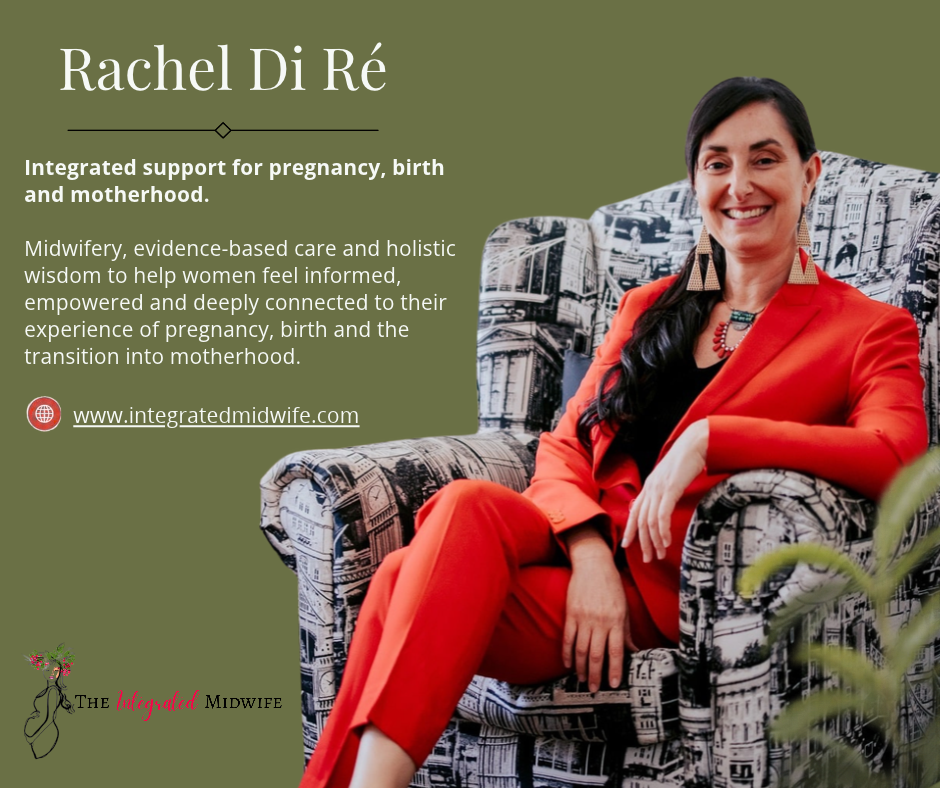
Meet Rachel - The Integrated Midwife
Rachel is a midwife passionate about bringing together evidence-based care, holistic wisdom and a deeper understanding of the journey into motherhood. Through The Integrated Midwife, she supports women to feel informed, empowered and connected to themselves throughout pregnancy, birth and beyond.
Discover more at THE INTEGRATED MIDWIFE