

Another woman cried in my clinic yesterday. Not particularly unusual. I’ve been a midwife for nearly two decades, and I’ve witnessed enough tears to fill a small swimming pool.
Tears of joy. Tears of grief. Tears of exhaustion, frustration, relief, fear and sometimes tears that seem to arrive without any obvious explanation at all.
But this woman was different in one particular way.
She didn’t want to cry.
She told me she doesn’t cry. She doesn’t like crying. And she seemed rather annoyed with herself that her body had decided otherwise.
When she left, she apologised for her outburst.
Outburst?
Now, I’m Italian. An outburst, in my world, involves a considerable amount of noise, some enthusiastic hand gestures, and potentially a few colourful words.
A woman quietly shedding tears in my clinic?
Hardly an outburst. And it got me thinking.
When did we become so uncomfortable with crying?
When did something so fundamentally human become something we feel compelled to apologise for? And more importantly, do we actually understand what’s happening inside our bodies when we cry?
Because there’s some rather beautiful biology behind those tears.

Emotions 101: You’re a walking chemistry experiment
Let’s consider falling in love. It’s romantic, intoxicating, exciting and sometimes completely ridiculous. But strip away the candlelight, the butterflies and the love songs, and underneath it all is an extraordinary orchestra of neurochemistry.
Dopamine contributes to motivation, reward and that delicious anticipation of seeing someone again. Oxytocin is involved in bonding and social connection. Noradrenaline contributes to arousal, alertness and those racing-heart moments.
Our brains interpret these physiological experiences within the context of our memories, expectations and relationships.
And suddenly, we’re in love.
Not terribly romantic when you describe it that way, is it? But the biology doesn’t make the experience any less real.
And crying is no different.
So what actually happens when we cry?
Imagine you’re sitting across from someone you trust. You’re talking about something difficult. Perhaps something you’ve been carrying around for weeks, months or even years.
You feel a tightening in your throat. Your breathing changes. Your eyes begin to sting.
And you think, Oh shit. Here come the tears.
Sometimes you can stop them.
Sometimes you can postpone them until you’re alone.
And sometimes your body seems to have made an executive decision without consulting you.
What’s going on?
First, your brain recognises something emotionally significant
There isn’t one single crying centre in the brain.
Emotional experiences involve interconnected networks, including the amygdala, insula, anterior cingulate cortex, prefrontal cortex, hypothalamus and brainstem. These structures contribute to recognising emotional significance, interpreting bodily sensations, regulating responses and coordinating the physical expression of emotion.
The hypothalamus and brainstem are particularly important in connecting emotional processes with autonomic and behavioural responses.
In other words, an emotion isn’t simply a thought floating around in your head. It’s an experience involving your brain and your body.
Then your nervous system gets involved
Our autonomic nervous system regulates functions such as heart rate, breathing, digestion and tear production. During emotional distress, sympathetic nervous system activity may increase.
Your heart might race.
Your breathing might become shallow or irregular.
You might feel hot, shaky or overwhelmed.
Crying itself can involve a complex interaction between sympathetic arousal and parasympathetic activity. And here’s the interesting part.
Some research suggests that aspects of crying may contribute to physiological regulation, including changes in breathing and vagal activity. But crying isn’t a guaranteed nervous-system reset button. Sometimes we feel better afterwards. Sometimes we don’t.
The emotional circumstances, our sense of safety and the response of the people around us all matter.
And then come the tears…
Here’s something I find fascinating. Your tears don’t actually come from your tear ducts. They’re produced primarily by your lacrimal glands, which sit above and toward the outer side of each eye.
The tears spread across the surface of your eyes when you blink.
They then drain through tiny openings near the inner corners of your eyelids, through drainage channels and eventually into your nose. Which explains why you end up with a runny nose when you’re having a good cry.
It’s all connected.
And what are tears made of?
Mostly water, but also electrolytes, proteins, enzymes, lipids and other substances that help protect and maintain the eye’s surface.
We produce different types of tears.
Basal tears continuously lubricate and protect our eyes.
Reflex tears respond to irritants such as smoke or chopped onions.
Emotional tears occur in response to emotional experiences.
Their production involves some of the same tear-producing machinery, but emotional crying is coordinated through additional neural pathways. And no, before you ask, we haven’t established that emotional tears are a meaningful way of flushing cortisol or other stress hormones out of our bodies.
It’s a popular idea, but the evidence doesn’t support describing crying as a hormonal detox. Our physiology is fascinating enough without inventing benefits.
But why can we sometimes stop ourselves crying?
This is where things become particularly interesting. Sometimes we feel tears building and manage to hold them back.
We change our breathing.
We redirect our attention.
We mentally distance ourselves from the situation.
We decide, consciously or otherwise, that this isn’t the time or place.
Our prefrontal brain networks can help regulate emotional responses through processes such as attention and cognitive reappraisal. But emotional regulation isn’t an on-off switch. Sometimes the intensity of an emotional experience exceeds our ability, or desire, to contain its expression.
And the tears come anyway.
That isn’t weakness. It’s physiology.
Equally, choosing to cry privately isn’t necessarily unhealthy suppression. There is a difference between consciously choosing when and where to express an emotion and believing you’re not allowed to experience or express it at all.
And that distinction matters.
The woman with one tissue
Over the years, I’ve noticed something rather curious in my clinic. A woman begins to cry. I offer her a box of tissues.
She takes one. Just one.
She folds it, dabs her eyes, folds it again, blows her nose, and continues using that increasingly soggy little scrap of paper long after it’s ceased being useful. Meanwhile, there’s an entire box sitting right in front of her.
Now, perhaps she’s simply economical with tissues. But sometimes I wonder whether that tiny gesture represents something much bigger.
How many women have learned to ration their needs?
Their rest?
Their requests for help?
Their opinions?
Their emotions?
Their right to occupy space?
How many women have become so accustomed to being accommodating that even their tears must be tidy, discreet and minimally inconvenient?
Of course, a single tissue isn’t a psychological assessment. But it’s an observation that has stayed with me. Because I see the same restraint in other parts of women’s lives.
Women apologising for asking questions.
Women apologising for needing more time.
Women apologising for not coping.
Women apologising for having needs at all.
And now women apologising for crying.
Crying isn’t a character flaw
Somewhere along the way, many of us have absorbed the idea that being strong means being emotionally contained.
Don’t cry. Don’t make a fuss. Pull yourself together. Be grateful. Other people have it worse.
But emotional resilience doesn’t mean never feeling overwhelmed. And emotional maturity doesn’t mean never shedding a tear. Crying can be a form of emotional expression, a response to physiological arousal, and a powerful social signal.
Human tears can communicate vulnerability and invite connection.
Sometimes the most helpful thing another person can do is simply remain present.
No fixing. No dismissing. No telling you to calm down. Just allowing the emotion to exist. And perhaps that’s part of what makes a safe clinical relationship so important.
Women don’t always need another professional telling them how to feel. Sometimes they need someone who isn’t frightened by their feelings.
Permission granted!
I don’t believe every woman needs to cry. I don’t believe tears are evidence of emotional health, any more than their absence is evidence of emotional suppression.
Some women cry easily.
Some rarely cry.
Some prefer privacy.
Some find enormous relief in a good sob.
There’s room for all of it.
What I want women to understand is that they don’t have to earn the right to express an emotion, and they don’t have to justify it afterwards.
You can be capable and cry. You can be resilient and cry. You can be rational, intelligent, emotionally mature and cry. You can even cry without knowing exactly why. And you can decide not to cry, too.
The important thing is that the choice belongs to you, rather than to some unspoken rule about how a woman is supposed to behave.
So, the next time you’re sitting in my clinic and the tears begin to fall, please don’t apologise.
You don’t need to tell me you’re not normally like this.
You don’t need to explain that you’re tired or hormonal or having a bad week.
You don’t need to label a few tears an outburst.
And for heaven’s sake, you don’t need to make one tissue last an entire emotional experience.
Use the whole damn box!
There are plenty more where those came from. And you, Beautiful Woman, are allowed to take up space, so claim it.
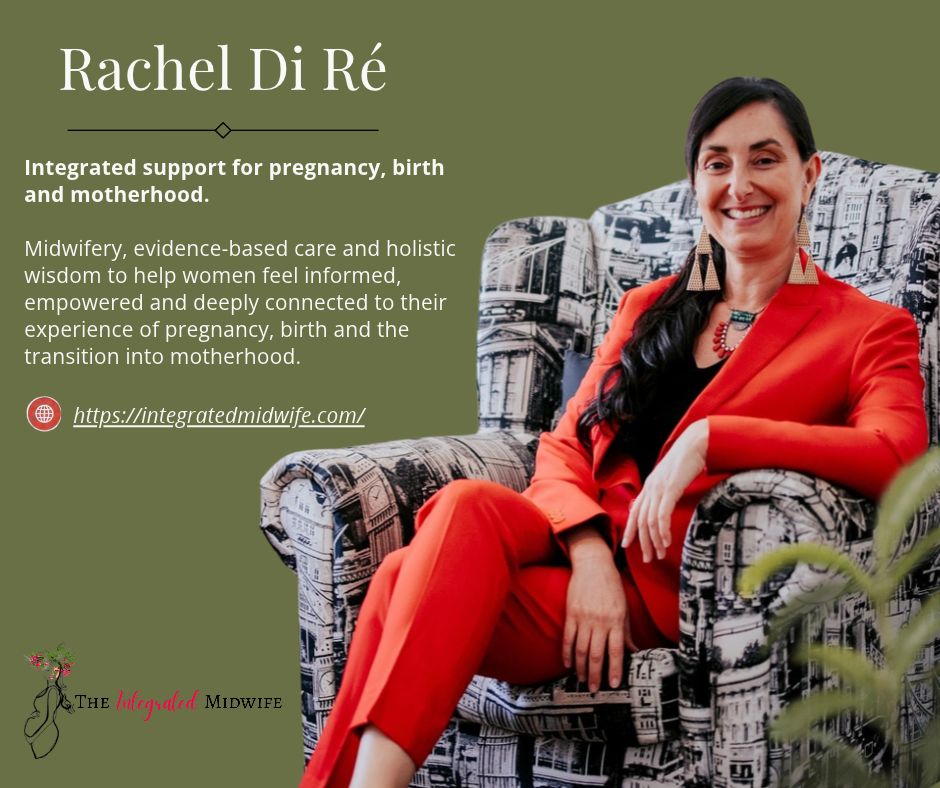
About Rachel | The Integrated Midwife
Rachel is an integrated midwife passionate about supporting women and families through pregnancy, birth and the transition into parenthood. Her work brings together midwifery knowledge, holistic care and a deeper understanding of the physical, emotional and personal dimensions of the birthing experience.
Through her work, Rachel supports women to feel informed, empowered and connected to themselves as they navigate one of life’s most significant transitions.
Discover more about Rachel and her work at THE INTEGRATED MIDWIFE
Thanks for sharing!